Why Is Crowd Work So Popular in Stand-Up Comedy? Blog Series
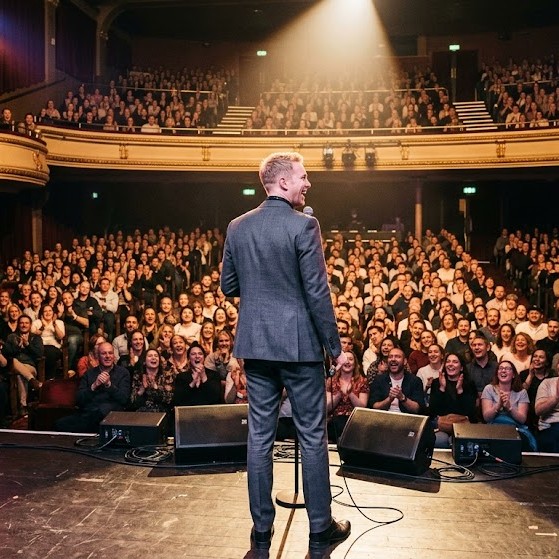
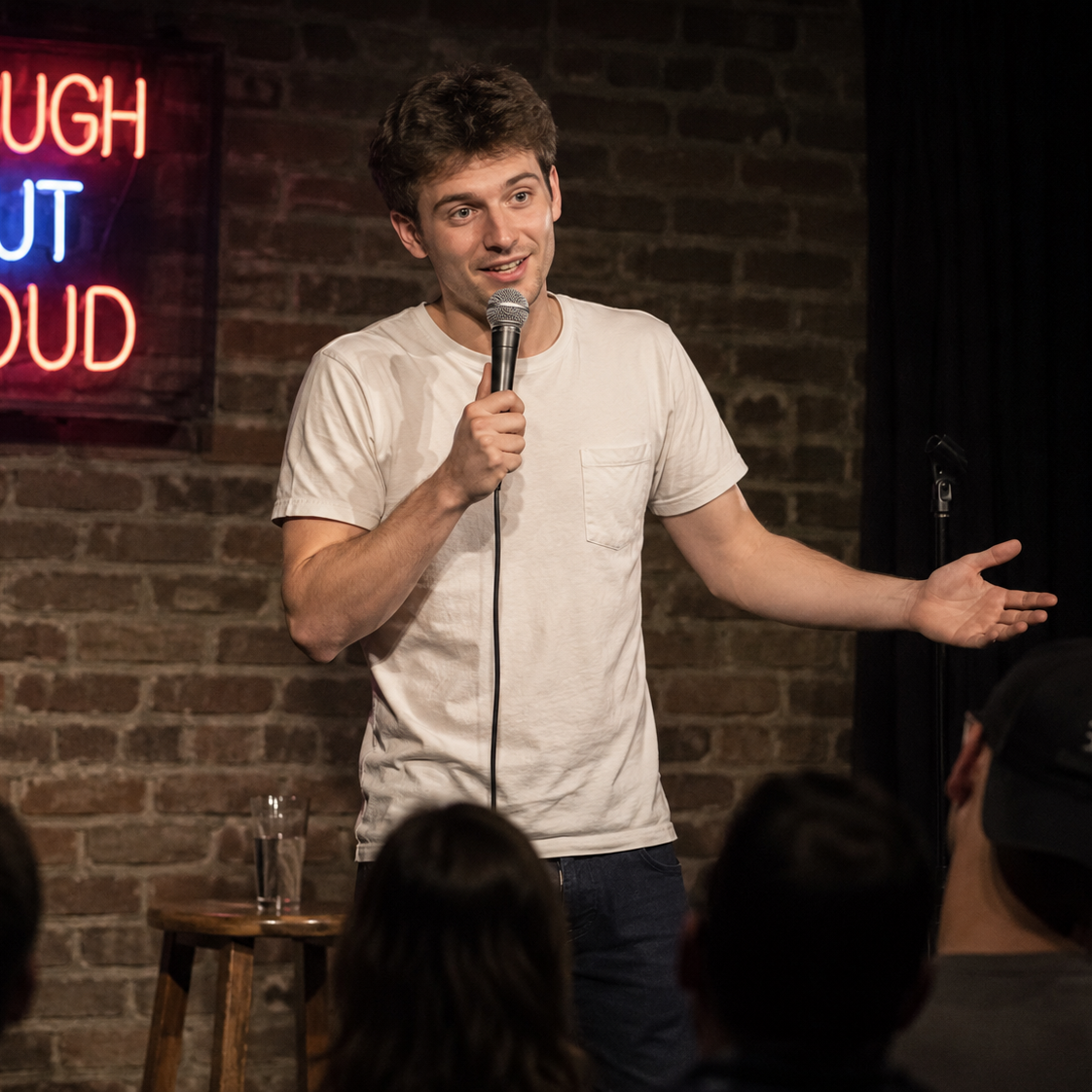
Crowd work does more than generate spontaneous laughs. It transforms the social contract between comedian and audience. Instead of delivering material at the audience, the comedian begins building a show with them.

The psychological shift from spectator to participant deepens engagement, trust, emotional investment and the horror of failure. Below are the core mechanisms that explain how crowd work strengthens connection and makes comedy shows more memorable, personal, and shareable.
Table of Contents
Audiences Become Participants, Not Spectators
When a comedian engages the audience directly, the performance stops being a one-way broadcast. They feel brought into the show. Even those in the back of the room hiding in the dark get emotionally involved. It points out that anyone could be in the spotlight which can cause personal terror.
The moment someone’s answer is turned into laughter, the entire room claims a kind of ownership. The show is building because of them, not in spite of them. When people contribute, even indirectly, they become attached to the outcome.
Crowd work requires listening, responding, adapting, and full attention on the audience. The audience perceives this as authenticity. And the honesty of the comedian’s comments that others can relate to builds that connection. Of course, it also has to be funny, otherwise it feels like crap.
Builds Trust Between Comedian and Audience
Crowd work signals vulnerability. The comedian steps away from rehearsed material and risks uncertainty. That act alone communicates confidence and ego risk.
Audiences feel the difference between being “talked at” and being “talked with.” Scripted sets can feel polished but distant. Interaction reduces that distance. It makes the comedian into a regular human being. (If comedians can ever really be considered regular human beings.)
Trust increases because the audience sees the comedian making jokes in real-time. They witness how the comedian reacts under pressure. If the interaction stays playful and respectful, it reinforces safety within the room.
Trust is foundational to laughter. Without it, audiences hesitate. With it, they lean in. Crowd work accelerates this trust-building process by demonstrating competence and control without arrogance.
When audiences trust a comedian, they follow them further into edgier material, stronger premises, and bolder jokes. And this sets the comedian free to take even bigger risks.
Using Audience Ideas Makes the Show More Fun
When comedians turn audience answers into laughs, the crowd feels included as part of the creative process. Their words sparked laughter. That shared authorship increases enjoyment.
It feels different when the humor originates from audience interaction. The energy becomes circular instead of linear. The comedian asks a question, the audience responds with an answer, then the comedian shapes it into jokes. Hey, we’re a team.
That feedback loop creates unique momentum. Each exchange feels alive and tailored. Audiences know that this could not be duplicated elsewhere which is exciting and fun.
Fun increases because spontaneity removes predictability. People enjoy experiences that are collaborative. Crowd work creates that collaboration and creates a unique comedy experience because of the audience input.
Audiences Enjoy Watching the Comedian Handle Pressure
There is admiration in watching a comedian turn random answers into jokes while on the spot. When a comedian navigates an awkward answer or a difficult personality, the audience witnesses a deep level of comedy skills. They see not just jokes, but mastery.
Handling pressure also humanizes the performer. Small struggles followed by a clever recovery fosters reliability. The audience feels part of the exploration into the unknown, rather than passive observers.
The shared tension binds the room together. When the comedian succeeds, everyone feels relief and pride. This dynamic deepens emotional investment beyond laughter alone.
Unpredictability Makes the Show Memorable
Memory is tied to strong emotional reactions. Predictable experiences fade quickly. Unpredictability cements funny moments into the mind as powerful recollections.
Crowd work by its very nature is unpredictable because no two interactions are identical. That madness makes each show distinct. Audiences remember awkward exchanges, odd names, dumb jobs, strange confessions because they’re unique to that night.
When an outrageous banter breaks out between the comedian and an audience member, this wild exchange creates a memorable attachment to both the event and the comedian. A surprisingly hilarious show, for those reasons, turns into a cherished memory.
Personalized Comedy Shows Creates Loyalty
Crowd work transforms a comedy show into a one-time, participatory event. Because the material is generated from audience interactions, the humor is tailored to the folks in the crowd.
The laughter is co-created. That personalization fosters a sense of inclusion. They recognize that the jokes, callbacks, and spontaneous exchanges are uniquely theirs. Exclusivity increases perceived value.
A scripted set can be replicated across cities with minimal variation, but crowd work cannot be duplicated. Audiences understand that what they participated in will never happen again.
This drives repeat attendance. When people expect a different show each night. The anticipation, the possibility of unexpected banter, and sharper risks is irresistable. Guests return not to rewatch material, but to experience a totally new event.
They bring friends because the unpredictability guarantees exciting entertainment. Each show feels like a premiere instead of a rerun, cultivating sustainable fan bases. This anticipation cultivates loyalty.
Crowd Work Sparks Social Media Sharing
When audience members contribute to the show, they have a story to tell. “He got a big laugh off of me.” “She trashed my friend.” “For just a moment, I was the star.” That narrative becomes shareable. People post about moments they helped create. The value of this sharing extends far beyond the venue and into your comedy career.
Crowd work generates organic marketing because it gives audiences personal ownership of the experience. They share not just that they attended, but that they participated. That distinction turns spectators into advocates.
The more you can get others to post in social media about you, the better known you’ll become. When it’s a one-of-a-kind comedy event, they’ll want to brag to their friends and relatives. That benefits you as you get better known for your crowd work.
In Conclusion
Crowd work endures because it satisfies something fundamental in live performance: the desire for genuine human exchange. From the fearless, razor-sharp improvisation of Don Rickles, who set the gold standard for playful audience roasting, to today’s crowd-savvy headliners like Matt Rife, Andrew Schulz, and Jessica Kirson, the tradition continues to evolve.
Comics such as Jacquis Neal, host of Crowd Control, have even built entire platforms around the art of live audience interaction. Crowd work preserves the raw immediacy that makes stand-up electric.
When comedians respond in real time, they demonstrate mastery, vulnerability, and control simultaneously. That combination builds trust, deepens laughter, and creates stories people feel compelled to share. The result is not just a funny night, but a distinct event that cannot be replicated.
In an era where content is abundant and attention is fragmented, crowd work differentiates live stand-up. It transforms a set into a shared experience. And shared experiences are what audiences remember, return for, and recommend.
If you think you’d like to try crowd work in a safe environment, check out my zoom workshop Crowd Work Made Fun & Easy. Zoom takes away the pressure of having to be funny for a live audience. You can learn the fundamentals with a supportive group of comedians just like you.
Previous Articles: Why is Crowd Work So Popular in Stand-Up Comedy? Blog Series
Reason 1: Benefits of Crowd Work in Stand-Up Comedy
Reason 2: Makes Stand-Up Comedy Feel Authentic
Reason 3: Crowd Work Demonstrates Mastery in Stand-Up Comedy
Reason 4: How Comedians Turn Conversation into Jokes
Reason 5: Emotional Danger Makes Crowd Work Explosive
In my next article, Reason 7: Why Hurtful Jokes are More Easily Forgiven in Crowd Work, in the Why Is Crowd Work So Popular in Stand-Up Comedy? Blog Series, I’ll demonstrate.

Weekend Workshop: Crowd Work Fundamentals
Join Greg Dean for a live, 3-hour online Crowd work Fundamentals workshop live over zoom —no prerequisites required. Learn how to ask questions, respond to audience comments, and turn their answers into punchlines, all while keeping your performance sharp and interactive.
Date: Rescheduled to April 11, 2026, 1pm to 4pm Pacific Time